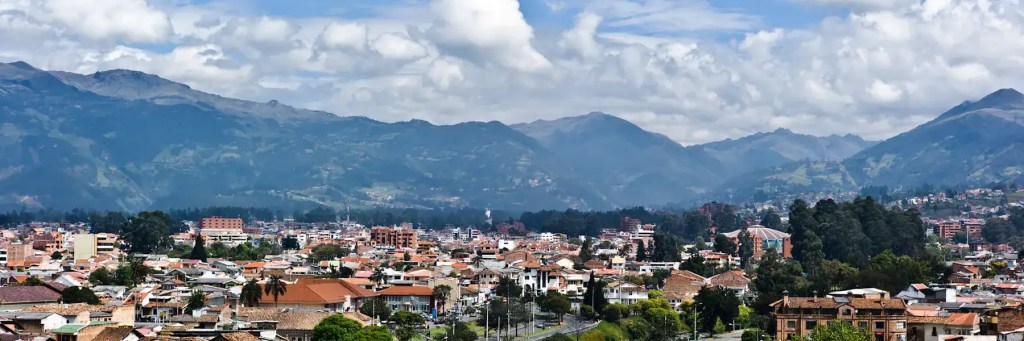
When people ask us about our life in Ecuador, the most common question we get is: “Is Cuenca safe?”
This question often stems from a lack of familiarity with South American geography and politics. It is easy for those outside the region to lump all these countries together, but safety varies significantly by location. While parts of Ecuador—particularly along the coast—struggle with safety issues due to drug smuggling routes, Cuenca remains a distinct and secure exception.
Life on the Ground
We walk almost everywhere and have never personally had a problem. Like any major city, pickpocketing occurs in high-traffic tourist areas, but these spots are regularly patrolled by police and private security. You will also notice a visible security presence at banks, malls, and high-end stores; rather than being a cause for alarm, most residents welcome this as a proactive deterrent.
Community Justice and Vigilantism
One unique aspect of the local culture is the concept of communal vigilantism or “community justice.” In areas where residents feel the law is too slow to act, they may take matters into their own hands. A local friend once told me that if someone were caught selling drugs near a school, the entire community might mobilize to physically punish the offender. While these “Citizen Brigades” are a part of the cultural fabric, the police frequently remind the public that such extralegal actions remain illegal.
The Numbers: Cuenca vs. The U.S.
Statistically, Cuenca is consistently rated as the safest city of its size in South and Central America. When compared to the United States, it is often safer than 95% of comparable cities.
- Cuenca’s Homicide Rate: ~6 per 100,000 people.
- Chicago: ~29 per 100,000 people.
- Memphis: ~44 per 100,000 people.
Despite these reassuring statistics, we still practice common-sense safety. We stay aware of our surroundings, research the neighborhoods we visit, and rarely venture far from home late at night. In 2026, Cuenca remains a beautiful, liveable city where the reality of safety far exceeds the negative stereotypes of the region.
 Millionaire Librarian
Leave a comment