• Ramit has grown in popularity with his 2023 Netflix Series How to Get Rich and his book I will Teach You to Be Rich. His Netflix Series involves discovering the money patterns of couples that are preventing their prosperity. Ramit is very emotionally intelligent and leans on his education in Social Psychology for insights into his guests.
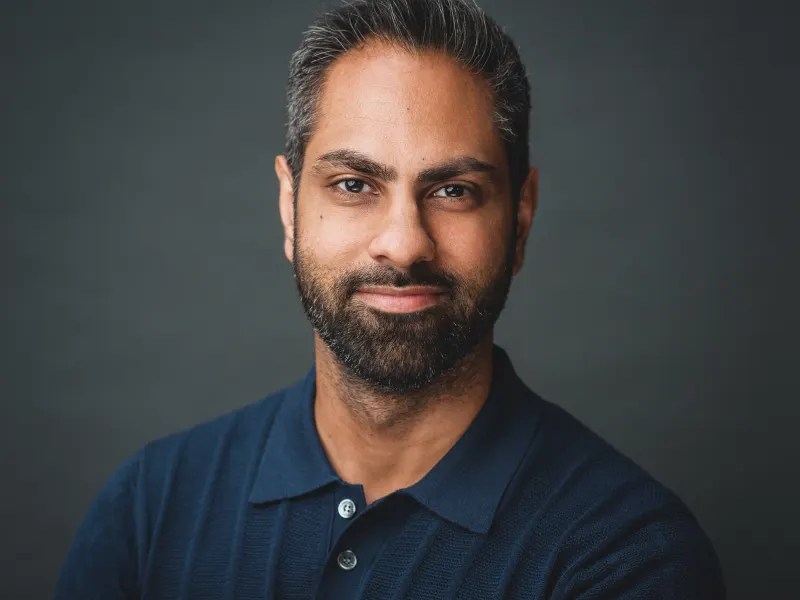
    One of Ramit’s key reoccurring ideas is his belief in selective frugality. He believes you should “Spend extravagantly on the things you love, and cut costs mercilessly on the things you don’t”.

    I agree with this idea but I would like to further categorize items into the extremely expensive categories like cars and houses. Items in this category you can really only afford to have one that is really nice. They just take too much money to maintain. For most people, having both a relatively expensive car and house will leave you in a situation where you will have payments forever. Ultimately, you want to pay off a car or house by possibly making extra payments so you can divert that cash into investments like index funds which have a high return.

    There are moderately expensive categories like clothes, vacations and hobbies where you can spend heavily on one or two without breaking the budget. Generally these don’t take much maintenance cost which means you aren’t obligated in paying them for years or decades. That is unless you buy them on credit which is another issue.

    The last category is things you should spend freely on like coffees, snacks, and some meals. Personally, I load myself up on these small indulgences whether that might be fresh fruit twice a week from the mercado or artisan breads. For Christmas, we got an artisan, smoked ham which would fall into this category. This doesn’t have to be food. It could be a convenience like our well-priced cleaning service.

    A category that stands alone from others is buying your financial independence and is what I buy with my money. This is the money used to buy investments so that you have the financial freedom to make bold moves. Financial independence isn’t an all or nothing thing. Having some financial independence may give you the bargaining leverage and aggressiveness to demand more money or take a few months when your new manager makes unreasonable demands.

    Which of Ramit’s ideas resonates with you? Comment or feel free to write me what you think.
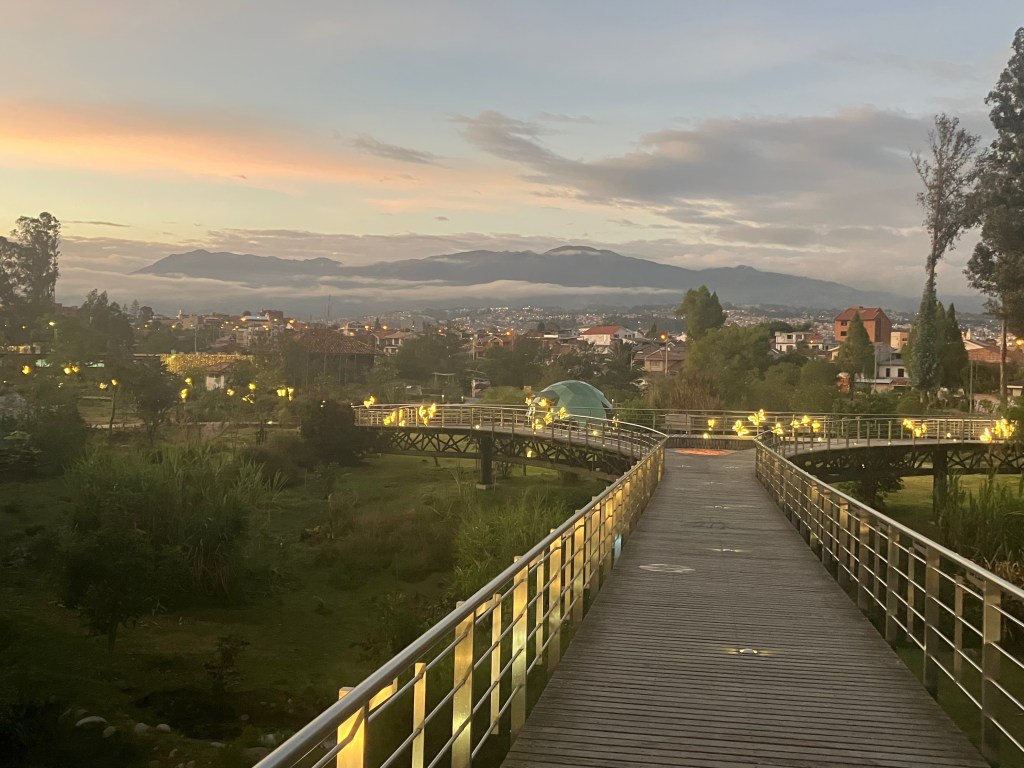
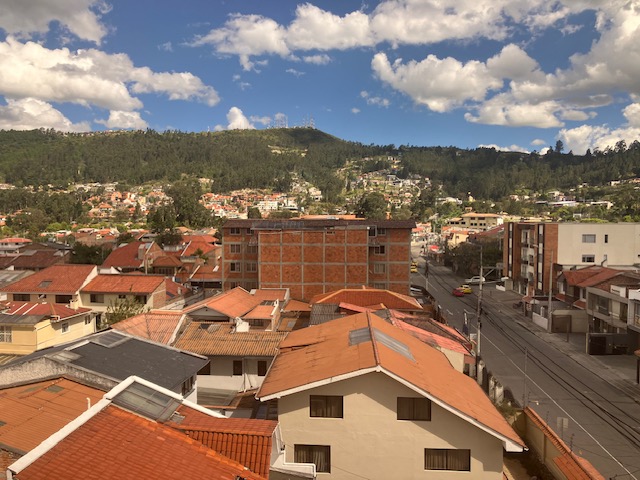
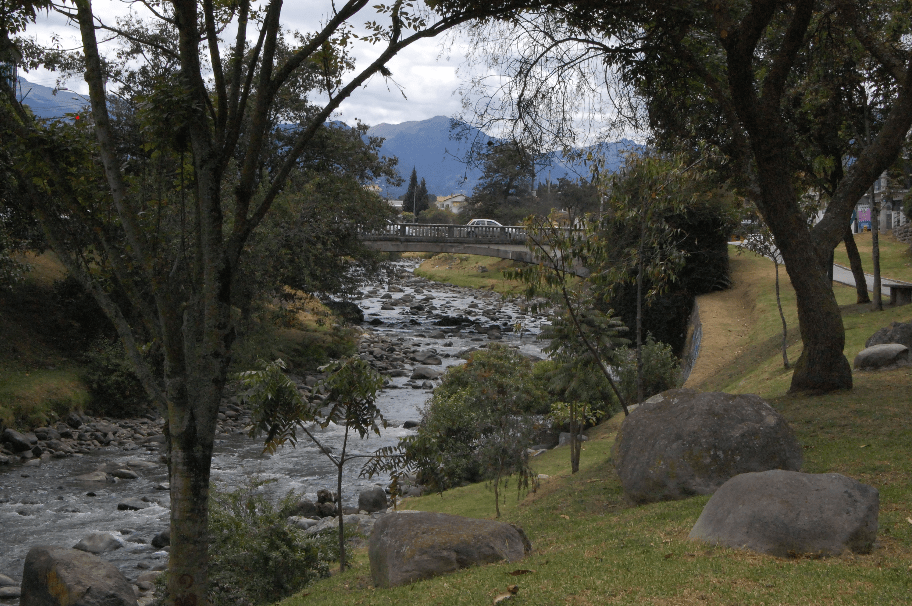
  • We just passed the holidays and five months living in Cuenca, Ecuador. About a month ago we moved into a house near the Botanical Garden in a “tranquilo” part of the city called “La Isla.” The area is named “La Isla” because to the west two rivers almost meet but then create an almost island and then finally meet together where they built the botanical garden. It is almost an entirely residential part of the city with only a small restaurant for lunches or “almuerzos,” a gym, and a couple of “tiendas” or small shops.

    Having a larger living space has been a welcome change. Previously, we were living in a very popular area called “El Vergel” but in a very small apartment. The house we are now living in is two stories which means we are not on top of each other. It was an unfurnished house which in Ecuador means it does not come with a refrigerator or an oven range. Purchasing those were an experience as well as beds, a desk, a loveseat, and other household goods. I’m glad for the help we received from our friend Javier and that we had a few months of familiarizing ourself with the areas and stores before we made the purchases.

    Eleanor has just started her new preschool and she is adapting well to it. Like in Missouri they send pictures of her throughout the day. We also opted in for the package where she goes on field trips. The other day (before we started going) they took the kids horseback riding. I think this month they are working on English and gross motor skills. She should do well in English and has been doing well learning Spanish. She only speaks a few words but understands dozens. Either way the videos we see shows she loves playing with her Ecuadorian “friends” by dancing and singing.

    Lauren has missed working and starts a new part-time, remote university job next week. She beat out several other librarians over several interviews to be offered the job. The money will allow us expand some parts of our lifestyle including joining a gym, hiring a weekly cleaning service, and Eleanor attending a private, impressive, German school when the time comes.

    Financially, the market has climbed to new heights. Also with Lauren working we can change our portfolio to be more heavily invested in stocks as her income will cover the majority of our expenses and we will no longer need the stability and lower returns of bonds. This is an idea I borrowed from JL Collins where bonds act as a “ballast” when you are drawing from your portfolio and when you are earning an income you maximize investment potential. It is more aggressive than some strategies but over the long term will have the best returns if you can “stay on the path.”

  • On almost every financial news outlet pundits are saying that the market is overpriced. Technology and AI companies have bid up stocks primarily on the speculation that AI will change the world. However, even if AI does change the world no one has quite figured out how to make it profitable. Also many critics argue that computer hardware for AI will need to be renewed and updated every 4 years making current investments void in short time.

    The overwhelming majority of my investments is in the S&P 500 which is overweighted in the Magnificent 7 (the largest technology stocks). Just a couple of days ago politician AOC was commenting how largely the US economy and stock market was dependent on AI’s success.

    Though I’m concerned with this development, I am going to stay invested and keep on the same path. There is an old theory that the market will adapt and adjust to known issues like the AI concentration. However, it is the unknown black swan events like the 2008 financial crisis or the Covid epidemic that are the real threats to the market.

    For anyone in retirement like myself, I would have a year or two of expenses in a bond index fund to help smooth the ride if the worst happens. If you are still accumulating shares, then view any downturn as an opportunity to buy the same shares cheaper than usual.

  • One of my favorite thinkers and writers is Morgan Housel. He has some very powerful ideas and I was watching him a few days ago and he was talking about being content with your life being a financial super power.

    I’ve been reflecting on the word “content” since I listened to him and I’ve thought about how it allows you live. When your content you can drive an old corolla. When your content you can live in the smaller house. These two things end up owning many Americans and tying them to payments for years and decades. If your clothes are older then you can live with them if you are content.

    Instead of caring about an aesthetic you invest your money in items that provide an investment return and allow you to own your time one dollar at a time. As another author Rob Berger says, “the best thing money can buy is financial freedom.”

  • Over the last few weeks we have begun burrowing into our newfound lifestyle. We have found several businesses which will be beneficial in everday life and made friends with all sorts of people. Locals have helped us gather an exhaustive school list and move to our permanent residence. Tomorrow our daughter starts preschool and has already shown she can bridge language gaps with games like chase at the local park. Tomorrow is also our anniversary and we plan to have an extravagant lunch eating fried seafood.

    Overall things are going great with a few hardships of raising a young, growing person where everything is new.

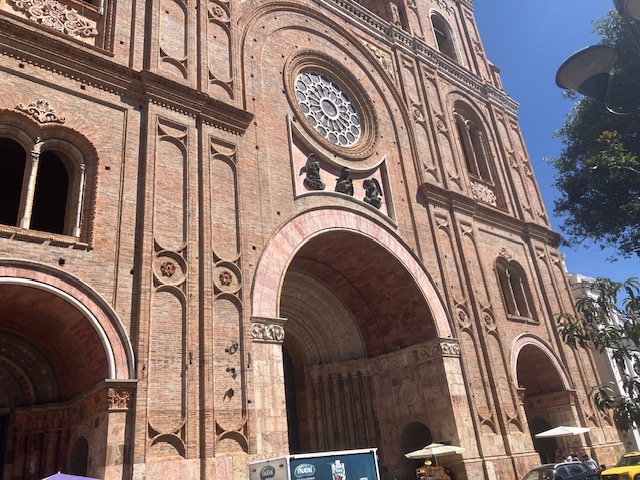
  • This past week in Cuenca has been filled with exploring different areas and restaurants. The New Cathedral in El Centro pictured above was beautiful and it is only a short cab ride away. The blue domes from it can be seen from miles away as pictured below.

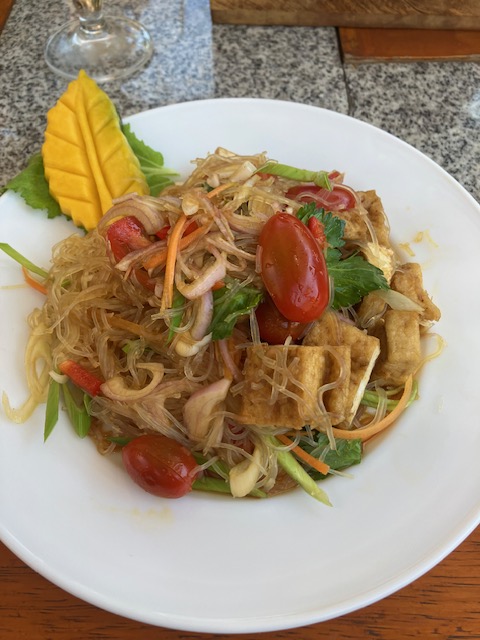
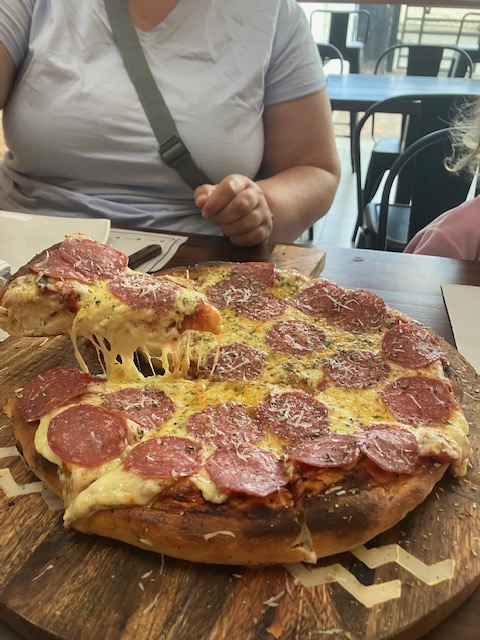
    Along with visiting historical sites we spent a lot of time visiting restaurants. We have ate Thai, American, Indian, and Venezuelan Style Pizza. Each of these meals cost around $20-$30 with drinks and were very high quality.

    Thai
    Venezuelan Style Pizza

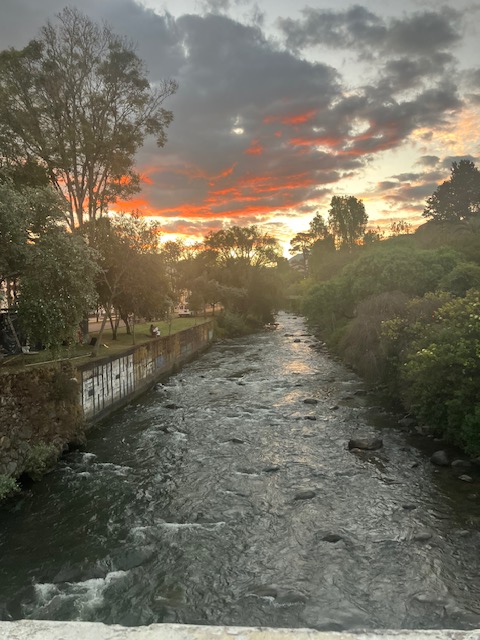
    The local beauty of the area is easy to stop and take note. The 4 rushing rivers that run through the city means your always close to water. You can see where the rivers run from far away because they have allowed large trees to grow in the parks and trails accompanying them.

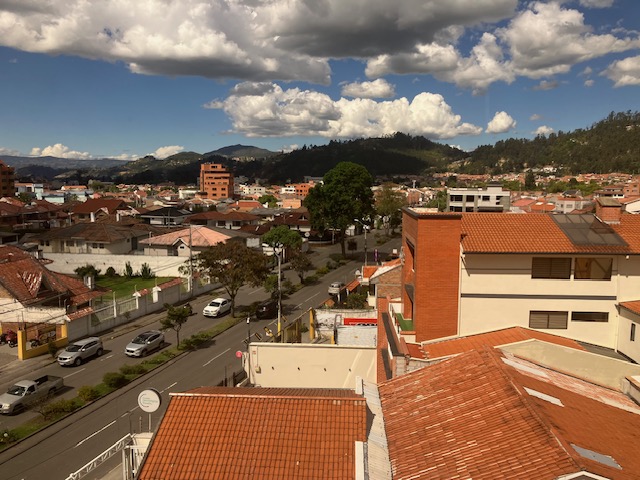
    Even our modest apartment has a wonderful view looking on the mountains.

  • We’ve arrived in Ecuador and some of my first takeaways are things I expected but were interesting to see and experience first hand.

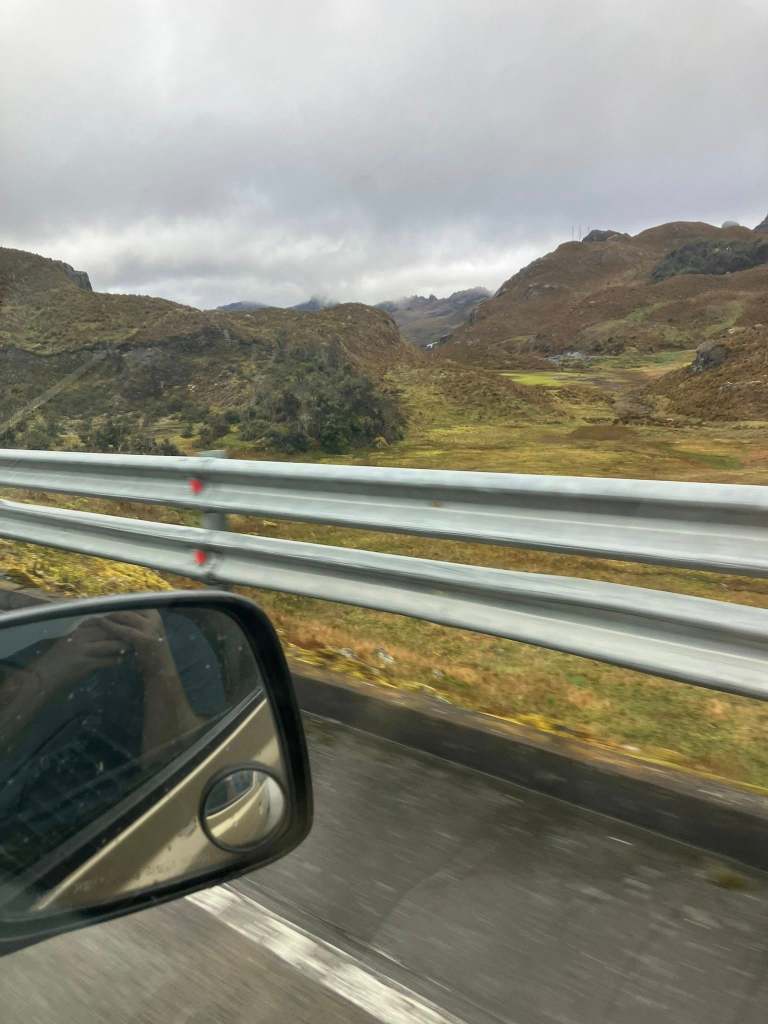
    First, the views while traveling over Andes from Guayaquil were breathtaking. The mountains rise up forever and dart down drastically. Clouds create a mist across the roads in places and my driver had to manually wipe the windshield a few times with a cloth because the windows were open.

    Once we arrived in Ecuador we discovered a mercado or market right next to our temporary housing. The mercado has extremely fresh fruits, meats, vegetables, and a dozen or so small restaurant shops with shared seating. We also found a local bakery and most breads are 20 cents each. Our first dinner was three chicken empanadas for three dollars total.

    Overall we are surprised by the low prices for most everything. Meals for us usually are no more than $3 each adult. A couple pounds of tomatoes or onions are $1. After a couple days we reworked our budget and believe we will come in come in a couple hundred dollars cheaper a month than we expected to spend. This means our plan has a 100% success rate when we run it through a Monte-Carlo simulator. Some things that are more relatively expensive are paper products like 4 bath tissue rolls being $5 and a roll of paper towels being $2.

    Another thing we found was long-term housing. We will be on the fourth floor of an apartment building which means we have an amazing view of the surrounding mountains which is a big luxury. The apartment is a simple 2 bed and 2 bath but is perfectly located in a sector of the city call El Virgil which has daycares, restaurants, cafes, and is a very desirable area especially by expats who want to walk the city. The apartment is $440/month and is furnished. The same apartment in even rural America would be multiples more expensive.

    An expected and realized negative of the city is the state of the driving culture. With every driver we have rode won our ride through the Andes at times the driver used and needed to use all the lanes of the road. They float from lane to lane finding the quickest way to get through an area. I’m more of a patient and orderly driver that tries to maximize being predictable and driving safely. It reminds me of Korean driving somewhat and it will be one of the reasons I probably don’t end up buying a car here for some time. Also cars are one of the items that are more expensive here in Ecuador because of the import taxes. In addition, most taxis cost only a couple dollars for a 15 minute ride.

    Overall we are ecstatic with our decision to move here. The low cost has to be experienced to really believe it. It opens up some amazing lifestyle decisions that would not be available if we had stayed in the states like private school, gyms, and cheap fresh food.

  • After months of selling household goods and cars, we are only a few weeks from taking a one way trip to Ecuador. Things are calm for now, but once we get in Ecuador more decisions will be made like where we want to live and if we will need car.

    Currently we are trying to decide if we want to live in the country or in the city. I enjoy living in the country and have never lived in a city before. However, if we choose the country then our daughter won’t be able to attend a daycare and we will need to buy a car which are shockingly more expensive in Ecuador. Living in the city means more walking and taking buses. Lately, my leg hasn’t been causing me pain, but I worry that the change of suddenly walking miles a day may aggravate it.

    My wife, Lauren, has done an amazing job researching neighborhoods and daycares and she mailed off our immigration paperwork a couple of weeks ago to our lawyer.

    The stock market has been floating frothy near all time highs for the last few weeks. The market has become somewhat calloused in regards to presidential announcements. Overall life is great and once some funds settle I plan to be at a stable 15% bonds that will help “smooth the ride” as JL Collins often says.

  • One area of my finances I have been poor at managing personally are known as cash reserves and an emergency fund. This money is set aside for unexpected life occurrences. Car repairs, vet bills, and hospital bills all can dig into our cash funds and if there isn’t enough there then you may have to go into debt to float those bills. Therefore, every money guru I know recommends a cash set account aside usually designated in months of expenses. 3 months may be enough if you have steady job, no loans or other financial liabilities, and are single. However, the more financially complex your life is then you will usually want to increase this amount from three months up to a couple of years.

    Personally, I keep 6 months of expenses in cash and 18 months in a bond index fund. The bond index fund is more volatile than cash but it also will make some money over the long term. The rest of my money is in stocks which are very volatile but will make the most money over the long term.

    You may be asking how I know whether to draw down bonds or stocks in case I need the money? Its mostly common sense. Since I am living entirely off of my investments I spend cash and replace it with stocks if the market is at all time highs or less than 5% percent down. If the market is more than 5% down then I pull from bonds to replace spent cash. Once the market recovers I replace the bonds with stocks and we start again from new.

    By holding 2 years of conservative assets in bonds and cash then I should have 2 years for the market to recover. If you have a bleaker outlook on the future then you may wish to have 4 years in conservative assets.

    Either way is fine but I feel that for me 2 years of conservative assets protects me enough without giving up too much long term growth (stocks).

    If you are unsure what end of spectrum you may be at then try to picture yourself in a falling market due to a radical political environment, a global financial crisis, or a pandemic and keep in mind noone knows when it will change or end. How do you feel? Whatever the negative feeling in your gut you feel then magnify it a few times and that will probably be the reality for you.

    There’s no one clear answer for anyone and you will need to meditate on these thought exercises. Personal finance is personal.

  • For the last few months we have been selling, giving away, and throwing out all of our possessions in preparation for a move to Ecuador. It has been tough at times but each item removed from our grasp is a small step towards our new life. The last items we need to get rid of are our cars which were listed yesterday.

    Largely the stock market has rebounded back to all time highs after Trump’s tariffs inserted instability and volatility into the market and economy. Despite my own political ideas I have remained fully invested and have advised my friends to do the same. This time was different. but the market did the same thing it always does. There was a pullback and then the market marched upwards to new all time highs. Compared to a year ago I have diversified some out of a total market index fund into around 10% bonds and 20% international compared to being 100% in a total market index fund. This change has been in order to smooth the ride and have a variety of funds to go to pull from when I need money.

    According our Monte Carlo simulation in ProjectionLab.com we have a 100% chance to survive and thrive based on our financial needs in Ecuador. However, it always helps to have more money to inflate lifestyle with more dinners out, a home cleaner, and it looks like this is what our portfolio will provide.

    This last year with its pullback has been different mostly because I have not been investing large amounts of money in the economy. Previously I looked forwards to the market retreating and I would watch my contributions buy more and more shares every couple of weeks in my 401k. Having to sell those cheaper shares during this pullback to finance our lifestyle was difficult.

    It has been fun visiting many of my inlaw’s friends who are at traditional retirement age. It often gets mentioned that we are retiring and they ask how. Lauren’s mother often comments saying “Lauren and her husband are very frugal.” Though that is true only when we are compared to other Americans. Generally I would say the main difference is that we have cheaper houses and cars compared to a typical American. We also tend to shop at cheaper grocery stores like Costco or Aldi and try to each eat most meals in. However, especially on this trip many of our meals have been at restaurants because we have been traveling so much. I try to make our frugality something we lean towards and not an ironclad rule that is used to beat down the other person.