The 4% rule says if you can live off 4% of your portfolio, you’re financially independent. For $100k/year in expenses, that means a $2.5 million portfolio. But if you can lower your expenses, you can retire much sooner — and the easiest lever I’ve found for that is moving somewhere cheaper.
Case in point: our family of three spends around $40k a year in Ecuador. At 4%, that’s a $1 million portfolio instead of $2.5 million. The same lifestyle in a medium cost-of-living US city would run well over $100k. And that $40k isn’t a bare-bones budget — it includes trips to Greece, family trips back to the US, a weekly cleaner, a gardener, and eating out and meeting friends for drinks regularly. We’ve actually expanded our lifestyle here because it’s so much cheaper to do so. If a market drawdown hit, these are also the easiest expenses to cut, which adds a nice buffer that a lot of US-based FIRE budgets don’t have.
If your number is more like $500k, part-time work can close the gap. Earn $20k and draw $20k from the portfolio (2% instead of 4%), and the math works well before you hit “full” FI.
Worth remembering too: 4% is a worst-case-scenario withdrawal rate. Median market returns run closer to 10%, so there’s a good chance that after 10 years of living partly or fully off your portfolio, you’ll have twice as much (or more) than when you started.
How Much Sooner Is $500k Than $2.5 Million?
The math on this is striking. Say you make $100k and save half of it — $50k a year — invested at a 10% average nominal return (about 7% real after inflation). Reaching $500k takes about 7.3 years. Reaching $2.5 million, by contrast, takes about 18.8 years. That’s an 11.5-year head start on freedom, just by aiming for the number that lets you work part-time instead of the number that lets you never work again.
Of course, the $500k path means you’re still earning $20k a year through part-time work, while the $2.5M path means you never have to work again. But if the goal is more time, more flexibility, and less dependence on any one job — 7.3 years beats 18.8 years every time.
I retired to Ecuador about a year ago. I was 39. My brother, ten years older and still working, was convinced I’d end up “sleeping under a bridge in the third world.” I told him that wasn’t going to happen. He wasn’t fully convinced, but he let it go, the way brothers do.
That conversation — and the dozens of smaller ones that followed it, with friends, coworkers, and total strangers — taught me more about talking to people about early retirement than any FIRE forum ever did. So here’s what I learned about who pushes back, who doesn’t, and why.
My brother never really listened, and I stopped trying to make him
My brother and I have never talked money the way I talk money with, say, an internet stranger in a FIRE subreddit. Partly that’s just how we are. Partly it’s because I never forced the subject on him.
A decade earlier, I bought him a John Bogle book. I’m a librarian — recommending the right book at the right time is basically my love language. He never read it. Looking back, that was probably a steep ask. You don’t hand someone The Little Book of Common Sense Investing and expect it to land the same way you’d want it to. He didn’t ask for a syllabus. He asked why I was retiring in Ecuador.
Here’s the thing, though: my brother and his family are doing great. They make good money and they spend it — on the house, the vacations, the stuff that makes their day-to-day better. We made good money too, and we spent it on getting free. Two different families, two different lifestyles, and both of us are living successful lives, just by our own definitions of the word.
I used to think that gap needed closing. It doesn’t. He was never going to read Bogle, and I was never going to want what he wants. Once I stopped treating that as a problem to solve, our conversations got a lot easier.
The friends who got it — for reasons that had nothing to do with me
The people who supported the move fastest weren’t always the ones I expected. Some had military pensions and had already retired in their thirties or early forties, so the shape of what we were doing wasn’t foreign to them at all — it was just a version of something they’d already lived. Some had spent years vacationing all over Latin America and had zero anxiety about the “developing country” part, because they’d actually been to one.
And a lot of people, honestly, were just tired. The political climate in the US had been getting worse every year, and for some friends, watching us leave wasn’t alarming — it was almost aspirational.
None of these people needed convincing. They’d already done the work of imagining a different life for themselves, or they’d seen enough of the world to know Ecuador wasn’t going to be a disaster movie. I didn’t have to sell them on FIRE. I just had to confirm the plan was real.
The hardest conversations came from people I barely knew
Here’s the part that surprised me: the sharpest pushback rarely came from family or close friends. It came from strangers.
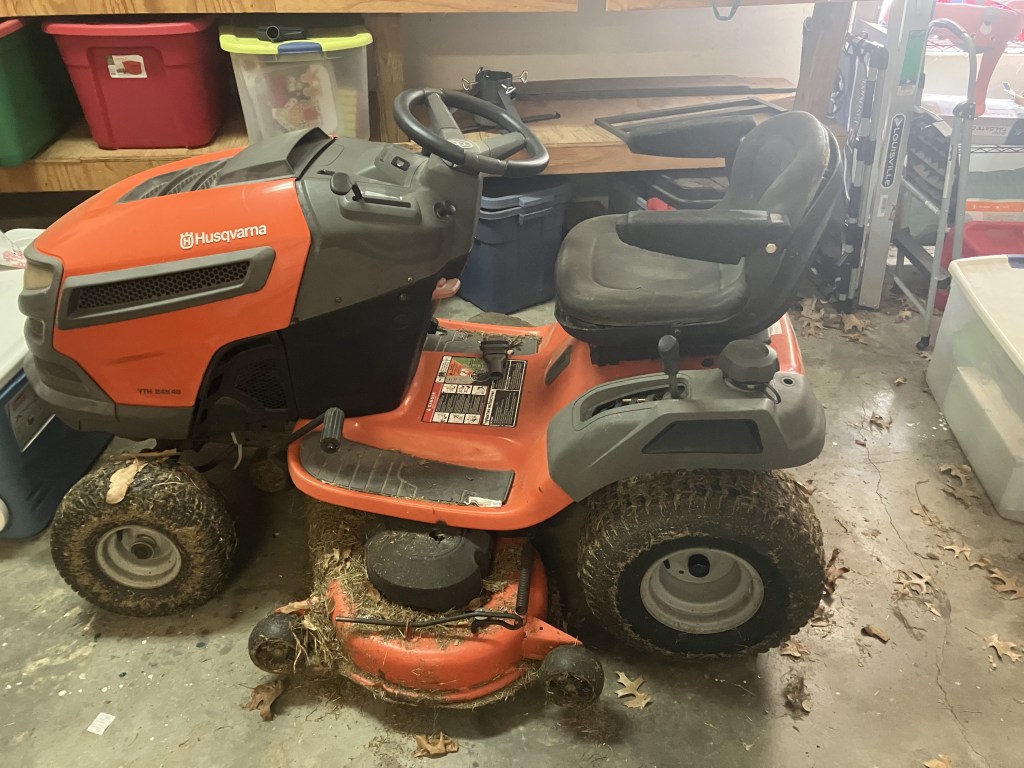
In the last few months before we left, we were selling off everything that wasn’t coming with us — furniture, tools, a lawnmower, whatever. And almost every time, the buyer would ask some version of, “So why are you selling this?”
I’d answer honestly. Moving to Ecuador. Early retirement. And then I’d watch a total stranger, standing in my driveway on my old lawnmower, decide they had questions. Real questions. Skeptical questions. What was I going to do all day. Wasn’t that risky. Did I have kids. What about healthcare. What was I running from.
These weren’t people who knew our finances, our plan, or us. They had no stake in the outcome and no context for the decision, and somehow that made them the most confident critics of all. I’d be stuck in a fifteen-minute conversation with a stranger about a decision they’d learned about ninety seconds earlier, over a lawnmower.
People close to you have some idea of who you are and what you’re capable of handling, even if they don’t agree with your choices. Strangers don’t have that context, so all they have is the headline — quit your job, moved to South America — and the headline sounds reckless if you don’t know the person behind it.
What I’d tell someone about to do this
If you’re planning something like this yourself, here’s the short version of what a year of these conversations taught me:
Don’t hand people a syllabus. If someone hasn’t asked to understand your financial philosophy, a book recommendation often isn’t the answer.
Your real support network probably already exists. Look for the friends who’ve already lived some version of your plan, or who’ve seen enough of the world that “developing country” doesn’t sound like a threat.
Expect the strangers to be the tough audience, not the family. They’ve got the least information and the most opinions, and that’s just how it goes.
You don’t need everyone to agree with your version of a good life. My brother and I are proof that two very different definitions of success can both be right, for the people living them.
We’re not sleeping under any bridges. We’re a year in, still married, still parenting, dog now included, and still convinced this was the right call for us — even if it took a while to convince the guy who bought our lawnmower.
I’ve been thinking lately about which choices actually got me here — not the spreadsheet-optimized version of my financial life, but the real one, messy timeline and all. Some decisions I got right for the right reasons. Some I got right for reasons I’m not proud of. And at least one thing I got wrong, and I’m still not totally sure I’ve learned the lesson.
The Corolla, Not the Tacoma
My first car was an almost-new Toyota Tacoma. Solid truck. It lasted a decade before it was totaled. When it was time to replace it, the obvious move — the move my younger self clearly wanted to make — was another Tacoma. $34,000 and years of payments.
I bought a used Corolla instead. Thirteen grand. A small Japanese econo shitbox, if I’m honest about how it felt at the time.
There was no dopamine hit in that decision. Nobody’s impressed by a Corolla. But the $21,000 gap between those two options, left alone in an index fund, is worth more today than either truck ever was. This is the least emotionally satisfying and most financially important car decision most people will ever make, and most people make it wrong.
The Years I Was Broke on Purpose (Sort Of)
There was a year I lived in real poverty, working part-time at Best Buy. My wife has a theory about that year: I didn’t actually want a full-time job, I wanted to keep living like I was still in college. She’s probably right, or at least half-right. It doesn’t fit neatly into my “good decision” pile, and I’m not going to force it to.
What I’ll say is this: the instinct that kept me living small during that year didn’t go away once I started making real money. When I finally had extra income, I didn’t inflate my lifestyle to match it — I kept living the same simple way and put the extra into a Roth IRA. Whatever the origin story of that instinct, delayed gratification, low materialism, whatever you want to call it, it’s the actual engine under almost every good financial decision I’ve made. The Best Buy year might have been avoidance. The investing years after were the same trait doing something useful.
The House I Sold When I Should Have Rented It
I bought cheap and small instead of trying to match the house my parents had. That part I got right. Where I got it wrong: I sold that house later instead of keeping it as a rental. Low mortgage rate, appreciating asset, built-in tenant demand — it looks like free money from where I’m standing now.
I try not to be too hard on myself about this one. Hindsight is 20/20, and low rates always look obvious in the rearview mirror. In real time, a rental property is tenant calls and maintenance emergencies and vacancy risk, and I was not in a financial position back then to absorb a bad year of that. It’s fine to let this one go as a reasonable call given what I knew, rather than a mistake I should still be kicking myself over.
Marrying Well
I married someone who genuinely enjoys a simpler life. This is not something I engineered — it’s closer to the biggest single input into everything else on this list. Expensive tastes, or a divorce, would have been financially catastrophic and emotionally worse. I don’t take full credit for this one. I got lucky, and I recognized the luck, which is maybe the only skill involved.
Debt-Free by Luck and a Little Planning
I worked at a university that paid for my master’s degree. Mostly luck. Some planning. But graduating debt-free gave me flexibility that compounded for years afterward — flexibility to move for jobs, flexibility to take career risks, flexibility to eventually walk away entirely. Debt doesn’t just cost you interest. It costs you options.
Money as a Mental Health Tool
Part of what good financial decisions bought me was the ability to make good decisions for my mental health. I moved across the country for a job once, and that move cost real money — thousands of dollars most people in a similar spot simply don’t have sitting around. Financial slack isn’t just about retirement projections. It’s the ability to leave a bad situation, or move toward a better one, without the decision being made for you by your bank account.
The One I’m Still Not Sure About
Here’s the one that actually nags at me. I had a great position. Genuinely good. I left it anyway, chasing more money and a better place to live, moving one state over. The new job turned out to be a mess, and that mess is a big part of why I ended up retiring early.
I love how it turned out. I want to be clear about that — I’m not writing this as regret. But I can hold two things at once: I love the outcome, and I’m not convinced I needed to blow up a good situation to get there. If I’d had the wisdom to just be happy where I was, a few more years at that other job would have been perfectly fine too.
I think the actual lesson isn’t “always take the leap” or “always stay put.” It’s narrower and harder than that: have the wisdom to recognize a really good thing while you’re still standing in it. That’s a skill I’m not sure I have yet. It might be the kind of thing you only learn by blowing up a good situation a couple of times first.
What This Adds Up To
None of these decisions look impressive individually. A cheap car. A small house. A boring index fund. Staying married to someone low-maintenance. None of it is a hot tip. But laid end to end, it’s the entire mechanism — every dollar not spent on a bigger truck or a bigger house became a dollar that could buy freedom later. The math is simple. The hard part was never the math. The hard part was wanting the freedom more than I wanted the Tacoma.
Part of moving to Ecuador was selling everything we owned in the States. We sold both our cars and all our furniture. We sold extra clothes and other household goods, and what we couldn’t sell we ended up donating or throwing away. Before we boarded planes to an entirely new country with only a few suitcases of belongings, we placed a few sentimental items with family to hold onto for later.
When we arrived in Ecuador we stayed at Airbnbs, then in a furnished apartment for a few months, before finding our current unfurnished house. Some items we had to repurchase, like beds, an oven, a washing machine, and a refrigerator. But we’ve been slow to repurchase almost everything else. It’s been nice to have less clutter in the house. It takes less time to pick up and clean. Fewer things for a toddler to throw on the floor.
The two big items we have not bought, and probably won’t buy for a long time, are a house and a car.
Renting Beats Buying, By a Lot
Renting is much less expensive in Ecuador than buying. In the U.S. there’s a rough guideline for rentals: if you can get 1% of a house’s value in rent each month, that’s considered a good return. That rule doesn’t hold up here. The house we live in is worth more than $100,000 to buy, but rents for $450 a month. That’s a 0.45% return, not even close to 1%.
Run the numbers over a year and it’s even more obvious. $450 a month comes out to $5,400 a year in rent. If we’d put that same $100,000 into an index fund instead and earned something like a 10% average return, that’s roughly $10,000 a year, and the money stays liquid and working for us the whole time. Buying the house would tie up six figures in an asset that, at least at these rent numbers, isn’t pricing in much of a return at all.
There are probably a few reasons rentals are priced so far below what buying would suggest: cheap property taxes, no A/C units to replace, and generally low maintenance costs compared to what we’re used to in the States. Real estate here is also viewed as more durable than money sitting in the bank. Ecuador’s move to the U.S. dollar, after the collapse of the sucre, is a recent enough history lesson. People woke up one day to find their life savings had vanished overnight. That kind of memory sticks, and it explains why locals lean toward property over cash even when the rental yields don’t make obvious financial sense to an outsider like me.
Skipping the Car
The other big item we don’t have is a car. Cars depreciate quickly in most countries. Here in Ecuador they hold their value better and stay relatively expensive to buy, but ownership still comes with taxes, insurance, depreciation, maintenance, and repairs, all extra costs on top of the purchase price.
There are also good, cheap substitutes to owning a car here: a solid bus system, walkable roads, and inexpensive taxis. A bus ride costs $0.30. Most moderate taxi rides run around $1.50, and crossing town might cost $2, maybe a little more. Even taking a taxi almost daily, we’d be hard-pressed to spend $100 a month getting around. A car, once you add up insurance, maintenance, and the taxes that come with owning one here, could easily run two or three times that before you’ve driven a single mile for fun. The math just doesn’t favor ownership when the alternative is this cheap and this convenient.
Staying Light on Purpose
None of this is really about furniture, or cars, or houses. It’s about optionality. Every dollar we don’t sink into a car sitting in a garage or a house’s down payment is a dollar that stays liquid, stays invested, and stays flexible if our plans change. That’s the same philosophy behind the index fund investing we lean on: don’t tie up money in things that feel secure but quietly underperform, when there’s a simpler and more flexible option sitting right there.
So looking at the last 6 months, a couple of things stand out. First, our average costs were higher than expected. I was expecting to be around $2,500–$3,000 and we ended up at $3,602.
One area that was higher than expected is health and medical. The gym cost was in there for three months for both of us, and medications — around $600 each for 6 months — were more expensive than we anticipated. We buy medications 3–6 months at a time, which means one big bill that wasn’t reflected in the other budgets I posted. Insurance was also a constant at around $100/month. We didn’t have any major hospital stays or surgeries. We may look into the public healthcare system, which should be a lot cheaper for medications but probably less English-friendly.
There were also some flights in the culture and transport sections that added some cost. Lauren visited friends in Europe, and we have a family trip to the States in December that we prepaid.
Restaurants were probably a little more than usual because we had our water heater repaired in June, which left us without gas for our stove for just over a week, meaning we were eating out a lot.
Food at $1,794 is lower than I might have expected given how much fresh fruit, vegetables, and meat we eat.
Though we are spending a little more than expected, I plugged the new numbers into ProjectionLab and we still have an excellent chance of success on our Monte Carlo. It didn’t even move the needle. No reason to worry.
I want to mentally withstand the urge to take my money out if the market drops 30%. I’m 100% stocks, but that means I’m entirely in index funds because I trust the future of the world — or things are so bad that I don’t care.
It is easy to invest in single stocks or tech when everyone is making money. The real challenge is staying invested in Bitcoin or something similarly speculative when it’s down 60% and looks to be going to zero. Imagine you’re in a speculative investment and it drops 60% over a year. That would be terrible. You have anchored on an amount twice as high, and there is no end in sight. There is no promise it will return to where it was. Index funds have always regained what they lost and reached new heights.
Index funds will not 100x in a couple of weeks, but they will slowly grow your money by roughly 10% a year until you have enough that that 10% is considerable and replaces your income.
Also, because index funds hold thousands of companies, your portfolio is dependent not on a single sector or company, but on the United States or the world. If the world economy fails, then I have bigger problems than my portfolio.
Cut early in your life and invest to build your nest egg.
When you retire with, say, $750k invested, in median market years you’ll earn around 10%, or $75k, from your investments. If your base needs cost $30k, you have plenty of room. In good years, spend more — $40k or so — and set a milestone, perhaps $1 million, where you give yourself permission to spend abundantly. Don’t push frugality further down the road than necessary.
The habits that made you wealthy need to be largely set aside once you arrive. New rules apply. You have to relearn how to spend on the small things that deliver outsized value — housecleaners, gardeners, eating out. These add enormously to daily life for a relatively modest cost.
That said, avoid locking in permanently higher expenses through debt payments on cars or a more expensive house. When the market pulls back sharply — and it will — you may need to return to your base spending until your portfolio recovers to all-time highs. Once it does, you can spend freely again.
You can’t take it with you, and to paraphrase Ramit Sethi, the real tragedy is living a smaller life than you have to. But the sequence matters: build the nest egg first. Without it, you’re simply trading your time for an inflated lifestyle — a poor trade. It calls to mind The Richest Man in Babylon, where the narrator describes a purse that never empties because his money makes money. You need that money machine in place first. Only then does the purse overflow on its own.
A rustic leather pouch spilling gold coins onto a wooden table in a cozy room
So what have you actually purchased? Freedom and autonomy. The freedom to walk away from a bad boss, a toxic workplace, or a draining staff member — for a month, a year, or forever. The freedom to pursue work that pays less but means more, or simply to work fewer hours. That is what the money machine quietly buys you.
Part of the reason we chose Ecuador as our home is the language. Spanish is a Romance language, and English has some Latin roots, so many words between the two are similar. This was a welcome change from my time in Korea, where almost no words overlapped with English.
I had also taken some Spanish classes in high school and college. However, that was decades ago, and I have never been the strongest language learner.
Though I was initially worried about the language barrier, my experiences in Korea taught me how little of a language you actually need to handle basic tasks. There are also excellent translator apps available now.
One thing to know about Ecuador is that very few people speak much English, so knowing some Spanish genuinely helps. Some older expats have lived here happily without learning much, and that is certainly possible, but learning the language opens up the culture and the inner lives of the people around you.
My wife speaks Spanish better than I do, though we came to it with a similar background. We also take regular lessons with a teacher who comes to our house. By the end of each session, my brain hurts from all the mental effort.
Our three-year-old daughter has been in a Spanish-speaking preschool for about nine months now. She understands a great deal of Spanish but speaks very little. We had her Spanish assessed by a speech therapist, and she is now attending speech therapy a couple of times a week to help her catch up with her peers. Her therapist says she is already bilingual.
Though challenging, learning Spanish again and conversing with Ecuadorians has been one of the most rewarding parts of living here. I have conversations in Spanish with multiple people every day. Sometimes I won’t catch something and just roll with it. I often sound like a toddler — and ironically, I can understand Ecuadorian toddlers pretty well. My wife likes to say this experience has probably staved off dementia by a decade, given everything we have had to learn.
One challenge you will face having children in Ecuador is education. Some families homeschool their children. I know there is a large homeschooling community in Vilcabamba. There is a small homeschool meetup here in Cuenca that we have attended — we went bowling. There is a great Facebook group called Expat Parents in Cuenca that generally has great information. We are friends with Cuencanos who utilize public schools, and we have spoken with an American family who lives outside Loja (Average Family Abroad on YouTube) who love the public school there.
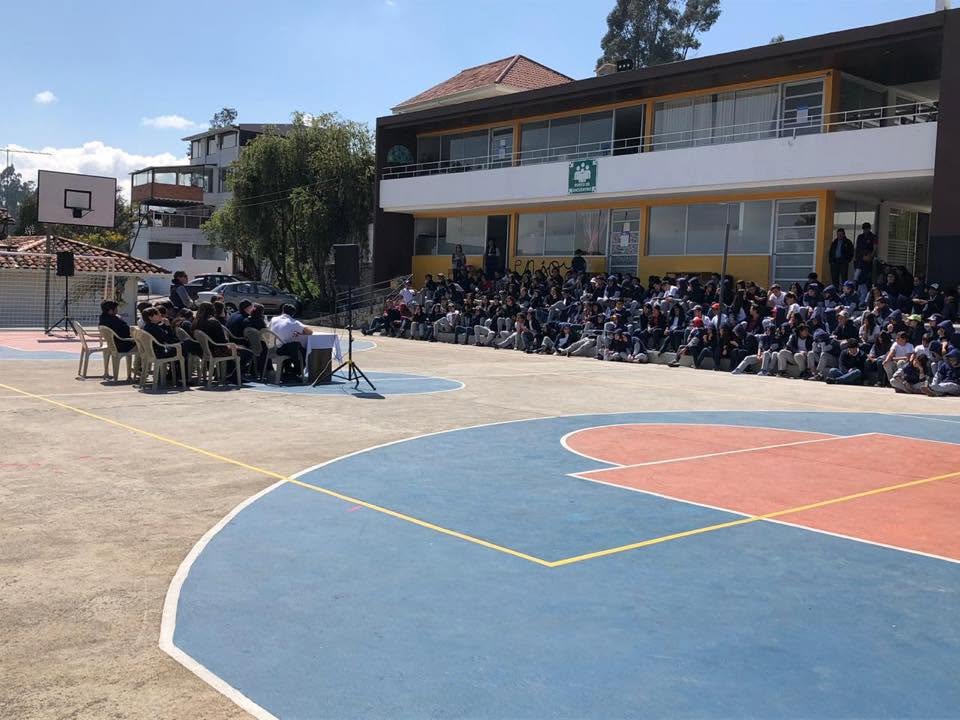
For us, we feel better paying for private school when the time comes in a couple of years. Right now there are two private schools competing for our consideration. The first is Colegio Alemán, which has a German curriculum approved by the German Ministry of Education. When students get older, there is a German exchange program where Ecuadorian students visit and live with a German family. They also have a symphony program. The campus is modern with many open-concept classrooms, and once children get older, classes are taught almost entirely in German. One big negative of this school is the cost. All things considered, you can expect to pay around $800/month for school and transportation. With this high cost, you can expect other students to come from high-net-worth families — doctors, lawyers, and foreigners. Some people might prefer this environment while others might not.
The second school we are considering is CEDFI. CEDFI has therapists and a nurse on staff. They have a great campus and classrooms. We have been told that, for a Spanish-language school, they have a more developed English program than most. Though our daughter would only be bilingual, the extra focus on English — rather than learning a third language — might help her settle into the curriculum more comfortably. The school has around 46 teachers and 460 students and is well regarded. Their motto, translated, is: “We educate for life, autonomy, and belonging and commitment to the local and planetary context.” Lastly, tuition and transportation are much cheaper than Colegio Alemán — we have been told it is around $300/month.
Some comparisons between the two schools:
Credentials & Diplomas
Colegio Alemán: Offers a triple-diploma pathway — the Ecuadorian Bachillerato, the German Fachhochschulreife, and the Multilingual International Baccalaureate (GIB). This is a major differentiator for families with international university ambitions.
CEDFI: Ecuadorian Bachillerato only.
University Access
Colegio Alemán: Graduates are prepared to enter top-tier universities in Germany, Ecuador, and around the world.
CEDFI: Oriented toward Ecuadorian university entrance.
Size & Scale
Colegio Alemán is noticeably larger (~600 students) with a substantial campus.
One of my hobbies is reading and writing on Reddit. Over the years, I have developed my own pet peeves. One is people writing on FIRE who are retiring at a traditional age or just showing off their high net worth accounts. Maybe it is just hearing the same things over and over that gets tiring. Maybe I just spend too much time online.
Another pet peeve of mine is people being way too conservative with the investment percentage returns they use, as if it is a virtue to be conservative rather than realistic. Using “high” historical returns has its own perils. How will you be a good steward of your money so it best benefits your family? Bill Perkins has a great book, Die With Zero, about giving early and often that should be widely read. We have our own plans about giving to our daughter when the time comes. Life should be easier for her, and that includes giving money or assisting with major purchases when she is an adult.
Many people have grandiose plans for their money to last and provide for generations. With money invested at median returns, this is very possible, but generally speaking, money does not last more than two or three generations. First there are the money earners and investors. The next generation generally manages it imperfectly, and the last generation fritters it away seeking luxuries the first generation prided itself on abstaining from.
What I’ve also noticed online, in my own thinking, and in some of Morgan Housel’s writing is that people often have arguments where the only thing separating them is semantics or a slightly different life experience. Give two diametrically opposed individuals more time to flesh out their histories, and they will come to an understanding and probably an agreement. Surely the current divisiveness of the political climate has made people quicker to anger as well. Politics has become personal for many people when it should involve boring discussions about tax policy.