• There’s a battle of world views that is happening on the world stage. The modern Republican view is that there is a winner and a loser in all negotiations. If you aren’t winning then you are losing. This worldview leads to needless combativeness. 

    The other worldview is that each side can win equally in every negotiation.  This worldview first came to me when studying capitalism. The idea is that productivity and goods are part of a pie of pizza. You don’t just get your slice but in real capitalism something is produced and the pie gets larger. Therefore everyone’s piece gets larger.

    If you insert this idea into current politics you may see what I am suggesting. Trump’s destruction of Federal service or international politics in hopes his pie slice is bigger than the other person’s is shortsighted. He is burning the pizza and gloating that his two slices are the best slices on the block. The world needs cooperation; not political toddler tantrums from our president.

  • I read an article titled, DOD Sets Policies on Consolidating and Eliminating Offices and Civilian Jobs. In the article, they provide a standard where we ask ourselves the question: If we went to war tomorrow would we hire this person to end the war? If the answer is no then they want to privatize or downsize the position.

    I worked as a military librarian for Morale, Welfare, and Recreation (MWR) for most of my 11 years of civil service. That position would be removed under current guidance. 

    During my career, my library provided a host of services for the military community. We mostly served military families. Every week we had the same 30 families come into the library to educate and entertain their children.  They would come to story time, do a scavenger hunt and then each check out 30 books, and some board games and movies. 

    I prided myself on being part of the foundation for the Altus base community. Where we were located was very desolate and remote. It commonly was listed as one of the worst bases to be placed. To be fair, my family loved being there but mostly for the friends we made on base and how affordable it was. 

    All this to say that the base library served as a key area for trying to change that perception. Young airmen would show up during in-processing and I would give them a tour showing them our well-maintained video-games, board games, CLEP materials, and book and movie collections. For entertainment or education we had free materials to keep Airmen from getting too idle and in trouble.

    I don’t think the administration has thought this through. The only other library within an hour was terribly outdated. As a cost saving measure, the library was inexpensive to run. I was told more than once that a single plane airborne for a day was more fuel money than my director salary for a year. Providing materials for dozens of home-schooling mothers is a better use of resources. Without MWR, there will be more recidivism at a time when we can’t afford it.

  • I shortly mentioned in a previous post that my family and I will be moving to Cuenca Ecuador. I want to use this post to share some of our excitement about the move. All of the information in this post will be second hand from watching videos of people already living there and from webpages so there may be some mistakes.

    So Cuenca…

    It was founded on April 12, 1557 has been called the “Athens of Ecuador.” This is primarily due to its old town which is a UNESCA World Heritage site. The old town has many hundreds of year-old buildings and cobblestone streets. These features make the city architecturally similar to Southern Spain with towering cathedrals. Additionally, some Incan ruins still remain in the city.

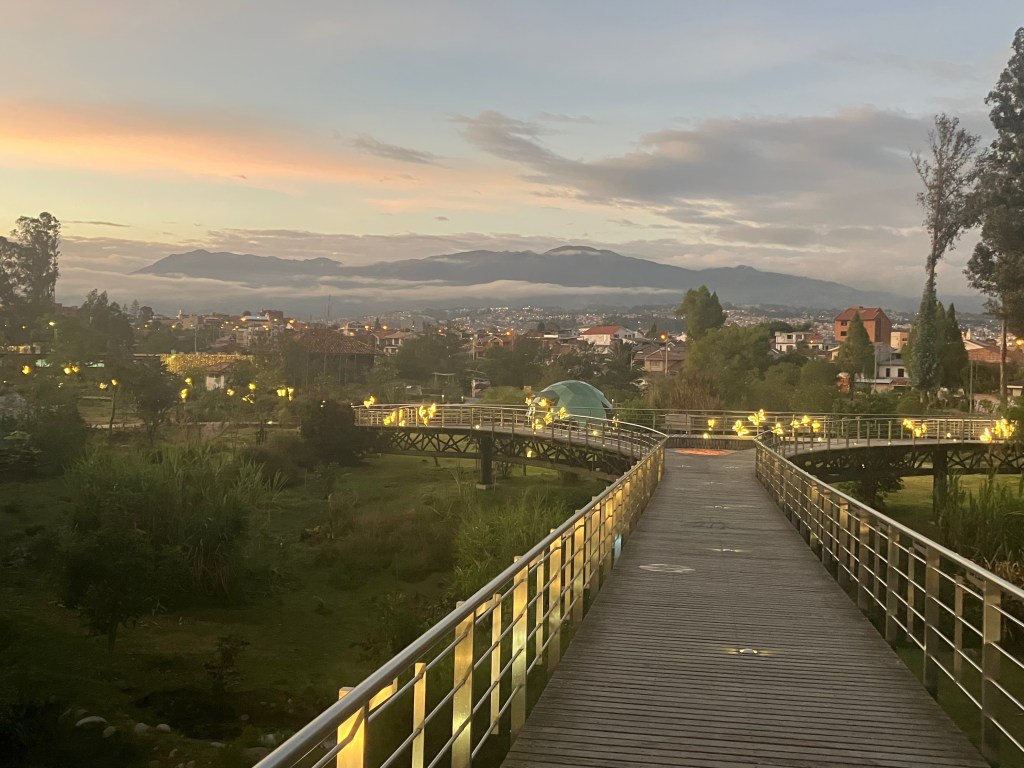
    The city is a geographical beauty with the Andes in the distance and four rivers crossing the city. The city is around 8k feet above sea level. This can lead to moderate to severe altitude sickness in many people. Cuenca has a highland subtropical climate and the locals say that its climate is “Forever Spring” with a mean temperature of around 60 degrees year round.

    Despite theese amenities the cost of living in Cuenca is extremely low and the barrier for permanent visa status is low as well. Therefore, it has become an expat hub where an estimated 8k-10k North American expats live and call home. As I have said before to friends, the road we are taking has been paved by thousands of others which makes it less daunting.

    We are excited for this move for several reasons, but we are especially excited that our daughter, Eleanor, will easily become bilingual in spanish and have an international experience. We have a daycare picked out and are researching the surrounding neighborhoods. My wife has worked tirelessly on researching daycares, schools, and neighborhoods.

  • The above two houses are very similar. Both are around 1200 sq ft. Both have central air and were updated in the last 10 years. However there are two key differences; the price and the location.

    One house is in rural Oklahoma in a small city of 20k people and the other is in Nashville where housing prices have boomed in the last decade.. Unsurprising to many people, the Oklahoma house costs much less but how much less may be shocking. The Oklahoma house is $80k while the house in Nashville is an astonishing $389k. The old adage rings true “location, location, location,”

    However, what many people don’t truly realize is that by choosing Nashville over rural Oklahoma you are enslaving yourself to decades and decades of work. By picking rural Oklahoma you could retire early.

    In 2020, I chose to live in rural Oklahoma and retired late last year at the age of 38. Though possible for many but not all, I found a position paying 90% of what I would have made in a large city. I bought a cheap house like the one above, and I saved and invested exclusively into index funds until I could retire. I did this on a public servant income where I never made above $85k.

  • My family has tossed around the idea of moving to latin america for years. Initially we were looking at Boquete, Panama. I closed this pathway due to the government requiring a large deposit of 200k in their banks or real estate. That was too much for us.

    A few months ago we discovered Ecuador. We found out they only required a little less than $50k investment and upon further exploration we found out that our bachelor’s degree satisfy a requirement for a temporary visa.

    After much thought and hundreds of monte carlo simulations we have decided to move to Cuenca, Ecuador.

    With the influx of cash from selling cars and household goods we have decided to pay off lingering student loans that will no longer be forgiven.

    Part of my worry about this decision is that we will remain largely invested in the US centric S&P 500. We do not feel good about the future of America or its stock market. However, I try not to base my investment decisions on political changes no matter how extreme so I will remain fully invested mostly in the US.

    Despite these academic beliefs, I am worried. I believe we are the closest to severe recession or depression since the great recession. Tariffs cause inflation and effect the lower and middle classes most. I also worry that once foreign countries move their trade to other countries then they will be reluctant to move it back; especially during this presidency.

  • Since moving last July we have been renting our house in Altus Oklahoma. That has been a great decision.

    As fate may have it that we will probably be moving back to Montgomery Alabama. There are better work opportunities there than anywhere else at this time for us. Montgomery is also a good area to buy and own rental property.

    Success with the Oklahoma property and us probably moving back to Montgomery has led me to be bitten by the real estate bug again. I have been reading retired Air Officer RIch Carey’s blog since 2019 who has been very successful investing in the area and reached out for some neighborhoods to limit my search. I’ve also found Coach Carson and a great spreadsheet he made about assessing the potential of a property. As a note, I plugged in my numbers for the Oklahoma house and they are excellent.

    All of this research has been entertaining as I have still a lot to learn about real estate. It is a financial frontier with areas I still need to explore. Also looking back at the other two properties I have owned in the past I regret having sold both of them.

    Our plan currently (which probably will change) is to purchase a house to live in and when we move and then use as a rental later. I also want to buy a new rental house every two years with 20% down until we have 4 or 5 total rentals. When I have modeled this scenario in ProjectionLab it has done much better than continuing to invest solely in index funds. The houses will be in traditionally blue collar neighborhoods.

  • There is a lot to say about Dave Ramsey. On one hand he is probably responsible for helping more people with debt in the US than anyone else.

    On the other hand his views lack nuance and he demands obedience from both his staff, fellow personalities, and viewers.

    Part of what makes him so successful is how he entertains by beating simple messages into followers. Part of this simplicity is because of the fundamental religious foundation of his views.

    There can be little nuance when you believe sin is being discussed.

    Despite this Dave is one of the best speakers against debt when 56% of Americans cannot afford a $1,000 emergency expense. However, he is a debt crusader even when vanquishing debt is not financially optimal like delaying investing to pay off low interest debt.

    After you are finished paying off debt comes the time to start investing and this is when his advice is especially poor. Dave recommends four types of funds with category names that are vague. All of which you can get through his SmartVestor Pros for very high costs. He also chooses these funds by historical returns. This is such bad advice that it is required by regulatory agencies that “Past returns are not indicative of future returns.”

    Also, his advice fails when he recommends a safe withdrawal rate. He recommends that you can withdraw 8% which is much higher than the Trinity studies proven and tested 4%. This advice is dangerous and his justification is that the market on average returns 10%. The problem with this advice is sequence of return risk. If you start withdrawing 8% during a market downturn you will run out of money in less than a decade. It reminds me of the parable of the 6 foot man who drowned in a river that was on average 4 feet high. Its not the average that you should fear but the extremes.

    Overall I think Dave is somewhat helpful. As a viewer you can also expect to see a good tongue lashing eventually. Honestly his debt advice isn’t terrible. and helps many people get the wake up call they need. However, once someone transitions to investing money they would do much better to listen to the Money Guys, Money with Katie, Kosher Money, or anyone considered a Boglehead,

  • The personal finance expert landscape is always changing and I enjoy listening to almost all of them. I am going to review, compare and contrast various financial experts. Please comment below if you have a financial expert that you would like me to review.

    JL Colllins is my favorite financial expert. When I was a librarian I often recommended his books to military trying to learn more about personal finance. He has three books which I have read multiple times. In the chronological order there is the Simple Path to Wealth (TSP), How I Lost Money in Real Estate before it Was Fashionable, and Pathfinders.

    TSP lays out the simplest and most powerful way of building wealth I have found. Collins is a self-defined Boglehead which I have found to be the most academic and least exploitative personal finance community. This group follows the teaching “St. John Bogle” which promotes utilizing index funds.

    Collins is known as the “Grandfather of Financial Independence.” He was early on the scene of the modern day FIRE movement (Financial Indepepdence Retire Early).

    One area Collins’ advice is controversial is that he prefers renting to owning a house. His second book details renting out a condominium that he calls an alligator. This is because the property ended up “eating him alive.” We recently ran a comparison between renting and buying and currently we are getting much better deal renting. Theres some great rent vs buy calculators that I recommend people utilize trying to make this decision.

    JL believes while working to invest in one fund, VTSAX or the Vanguard Total US Market. This idea is simplistic but is powerful in that you just put your money in the fund and sit back and watch it go up. No rebalancing or complicated strategies. When you are retired you add bonds to “smooth the ride.”

    Collins also popularized the idea of FU money and how when you buy investments then you are effectively buying back your life. Another idea I have revisited recently is allowing money to let you live on your own terms including taking large breaks from work.

    Overall JL is my favorite financial expert. He is not a provacateour like many financial expert “influencers.” His advice is simple, thought provoking, honest, and powerful. He embraces frugality but makes it purposeful. His advice is simple but that makes it purer and easier to follow.

  • There are three major discount brokerages; Schwab, Fidelity, and Vanguard. All three have have rock bottom fees and expense ratios which is the most important part. In this post, I will discuss, compare, and contrast each company.

    Charles Schwab was the first discount brokerage I used. Schwab is publicly owned, has low prices, and mostly great customer service. I have had some issues with my wife rolling over an IRA previously, Where Schwab excels is in their user interface platform. In my experience it is the most intuitive. Another benefit of having a Schwab Brokerage is having access to Schwab Bank. I lived overseas in Korea and Schwab Bank has free ATM withdrawals and excellent exchange rates. This made Schwab Bank exellent to use internationally. Overall I feel Schwab is the best company to use for most people.

    Another great company is Fidelity. Fidelity is privately owned and generally is a great company to work with. They have low prices and fees and amazing customer service. One place they are lacking is their online platform. I had a 401k with them and changing what I was invested in was never very intuitive. Due to mostly their lackluster interface I rank Fidelity second best, but I don’t hesitate to use them if they have a feature that is better than Schwab.

    The last company is Vanguard. Vanguard has a unique organization where the owners of funds are the owners of the company. This means that the company’s goals and your goals are aligned. Vanguard also invented the index fund and has a great variety of index funds. Jack Bogle was the founder of Vanguard and the “Boglehead” philosophy is what I most closely identify as.

    However, Vanguard is known for having a less intuitive interface and worse customer service than the other two companies. I actually own Vanguard’s VIOV ETF through my Schwab brokerage. Through this tactic I am able to get more variety of funds with arguably better customer service.

  • I watched an interview of author Jason Zweig and he spoke on the importance of knowing why you own something.

    I own index funds. They are the best way to own a diversified portion of the stock market. They also are cheap which means you keep more of your money invested.

    By owning index funds, I am putting my faith in the United States stock market which means I am putting my faith in the United States economy. Investment wise there isn’t a surer bet.

    Many knowledgeable investors recommend further diversifying into international stocks. For some time, I followed their recommendation, but continued poor performance and immature foreign accounting pushed me into only owning domestic stocks currently. JL Collins also speaks and writes how by owning domestic companies gives you international exposure because the companies sell their products internationally.

    Jason Zweig’s also explained that if you own individual stocks then you need to know the business. This is different than what the stock price has done. He recommended reading the last 3 years of annual reports as well as the last 4 quarterly reports. This is because you are speculating when you only track the stock price and where the stock ultimately lands is dependent on the underlying business fundamentals.

    Knowing what you own is useful for many reasons, but most importantly it stops you from selling when the price drops dramatically which is a real killer to wealth building.